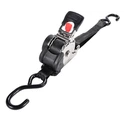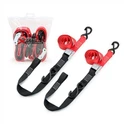

Retractable ratchet straps are designed to save time, reduce loose webbing, and improve ease of use. However, because they contain internal springs, spools, and braking mechanisms, they can develop specific problems if used incorrectly or exposed to harsh environments.
This article explains the most common problems with retractable ratchet straps, why they happen, and how to prevent them in real-world use.
1) The strap does not retract fully
This is the most frequently reported issue with retractable ratchet straps.
Common causes
- Dirt, sand, or debris entering the housing
- Wet webbing retracted into the spool
- Twisted or unevenly wound webbing
- Internal spring fatigue over time
How to prevent it
- Clean and dry the strap before retracting
- Guide the webbing during retraction
- Fully extend and straighten twisted webbing
- Avoid rapid, uncontrolled retraction
If retraction remains inconsistent after cleaning, replacement is recommended.
2) The ratchet fails to lock or slips under load
Locking failure is a serious safety concern.
Common causes
- Worn internal brake teeth
- Contamination inside the braking mechanism
- Overloading beyond the rated Working Load Limit (WLL)
What to do
- Stop using the strap immediately
- Verify the cargo weight and strap rating
- Replace the strap if slipping occurs more than once
A retractable ratchet strap should never be used if locking reliability is compromised.
3) Webbing twists inside the housing
Twisted webbing can prevent smooth extension and retraction.
Why it happens
- Pulling the strap at an angle
- Allowing the strap to retract too quickly
- Uneven winding on the spool
Prevention tips
- Pull the strap straight out from the housing
- Guide the webbing during retraction
- Fully extend and realign twisted webbing before use
Ignoring twists can lead to internal abrasion and premature failure.
4) The housing cracks or deforms
Housing damage usually results from mechanical stress rather than normal wear.
Typical causes
- Dropping the unit on hard surfaces
- Excessive vibration from vehicle mounting
- Using light-duty housings for heavy-duty loads
- Over-tensioning the strap
Once the housing is cracked or deformed, the strap should be replaced immediately.
5) Corrosion on hardware or internal components
Corrosion reduces strength and affects long-term reliability.
High-risk environments
- Coastal and marine use
- Winter road salt exposure
- Humid or wet storage conditions
How to reduce corrosion
- Rinse straps after salt exposure
- Dry completely before storage
- Store indoors when not in use
- Use corrosion-resistant hardware for harsh environments
6) Reduced holding strength over time
Sometimes a strap still functions but no longer holds tension as it once did.
Contributing factors
- Repeated overloading
- UV degradation of webbing
- Progressive internal brake wear
- Long-term exposure to moisture and dirt
Regular inspection helps detect this issue before failure occurs.
When should a retractable ratchet strap be replaced?
Replace the strap immediately if you notice:
- Frayed, cut, or melted webbing fibers
- Cracked or deformed housing
- Bent or damaged hooks and fittings
- Repeated sticking during retraction
- Any slipping or unreliable locking under load
Do not attempt to disassemble or rebuild sealed retractable ratchet straps.
Conclusion
Most problems with retractable ratchet straps are caused by contamination, overloading, improper retraction, or harsh environments. With correct use and routine inspection, many of these issues can be prevented.
For professional, commercial, or high-frequency applications, selecting a well-engineered retractable ratchet strap designed for durability is essential to long-term safety and performance.