
Whether you're heading to a cross-country rally, moving to a new home, or taking your bike in for service, knowing how to properly secure your motorcycle is a skill every rider must master. A poorly secured bike isn't just a risk to the machine itself-it's a hazard to everyone on the road.
As an expert at XiangleTools, I've seen many riders make the mistake of using cheap equipment or incorrect anchor points. Today, I'm breaking down the "Right Way" to transport your pride and joy, ensuring it arrives in the same condition it left.
1. The Essential Gear List
Before you even think about the ramp, you need the right hardware. Don't cut corners here; your bike's safety depends on it.
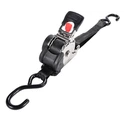
Ratchet Straps (High-Tension): I recommend at least four high-quality ratchet straps. Ratchet mechanisms allow for precise tensioning that cam-buckle straps often can't match.
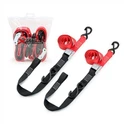
Soft Loops: These are game-changers. They allow you to attach straps to the bike without metal hooks ever touching your paint or chrome.
Wheel Chock: A front-wheel chock is the foundation of a stable tie-down. It keeps the front tire from twisting or sliding.
Loading Ramp: Ensure it is rated for the weight of your bike (plus your own weight if you're walking it up).
Pro Tip: Invest in professional-grade straps. At XiangleTools, we specialize in heavy-duty tie-downs that are built to withstand the dynamic forces of road transport.
2. Step 1: Loading and Positioning
First, ensure your truck or trailer is on level ground.
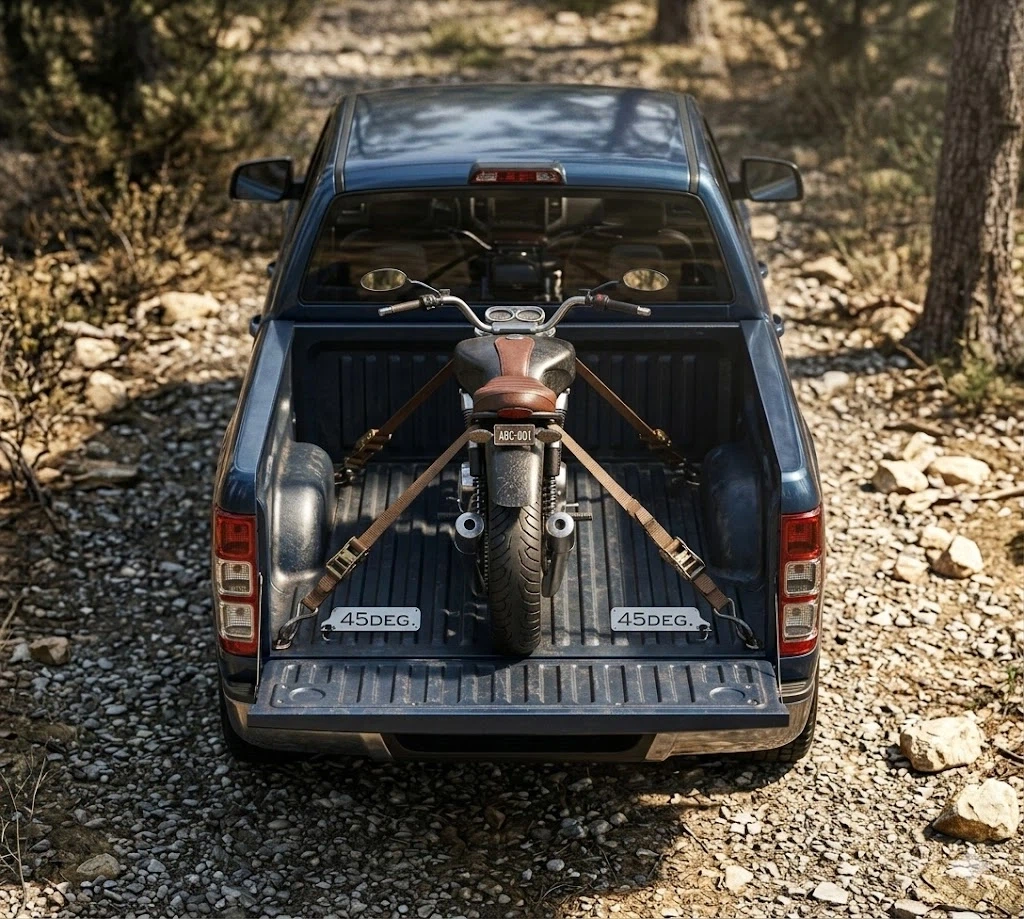
Deploy the Chock: Position your wheel chock at the front center of your trailer or truck bed.
The Two-Person Rule: If possible, have a spotter. One person pushes the bike up the ramp while the other maintains balance.
Into the Chock: Once the front wheel is in the chock, the bike should feel relatively stable. Note: You can use the sidestand temporarily, but never leave it down during transport.
3. Step 2: Securing the Front (The Critical Anchor)
The front straps do 90% of the work in keeping the bike upright.
Find Your Anchor Point: The best spot is the lower triple tree. It's the strongest part of the front end. Avoid handlebars if they have rubber mounts, as they can flex and cause the straps to loosen.
Use Soft Loops: Wrap the soft loop around the triple tree, then hook your ratchet strap to the loop.
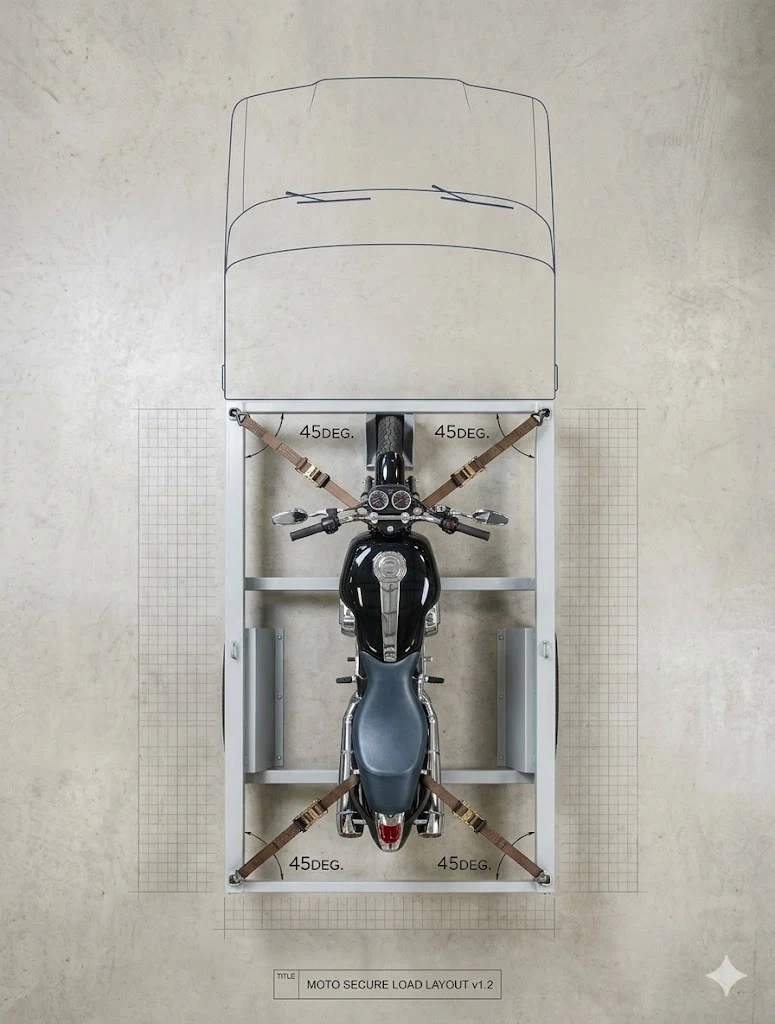
The 45-Degree Rule: Run your straps forward and outward at a 45-degree angle. This creates lateral and forward stability.
Compress the Suspension: Tighten the straps until the front forks are compressed about 30% to 50%. You want enough tension to prevent the hooks from uncoupling when you hit a bump, but don't "bottom out" the forks, as this can damage your seals.
4. Step 3: Stabilizing the Rear
The rear straps stop the back of the bike from bouncing or sliding sideways.
Anchor Points: Look for solid frame members or passenger footpeg brackets. Avoid plastic bodywork or exhaust pipes.
Even Tension: Pull the rear straps tight enough to keep the bike centered, but you don't need to compress the rear shock as much as the front.
5. Step 4: The Final Inspection
Before you hit the road, perform the "Shake Test."
Stow the Kickstand: If it's still down, flip it up. If a bump causes the bike to compress, the kickstand could punch a hole in your trailer floor or snap off.
The Shake: Grab the rear of the bike and give it a firm shake. The bike and the trailer should move as one single unit.
Secure Excess Webbing: Tie off the loose ends of your straps so they don't flap in the wind and mar your paint.
Conclusion: Safety is in the Details
Transporting a motorcycle isn't just about "tying it down"-it's about understanding the physics of the load. By using the right gear and the right points of contact, you protect your investment and ensure a stress-free trip.
If you have questions about which straps are right for your specific bike, feel free to reach out to us at XiangleTools!
About the Author
Dustin Xu is a cargo-securing specialist at XiangleTools, dedicated to providing high-performance industrial and outdoor tie-down solutions for users worldwide.